
Nano-Hydroxyapatite Toothpaste: A Smart Way to Support Enamel Health
When most people think about toothpaste, they think of foam, minty flavor, and cavity prevention. What often gets overlooked is how toothpaste actually interacts with tooth enamel—and whether it supports the body’s natural repair processes or simply tries to slow damage down.
One ingredient that has been getting more attention in recent years is nano-hydroxyapatite, often shortened to nHA. While it may sound new or experimental, it’s actually based on something very familiar: the natural mineral that makes up your teeth.
What Is Nano-Hydroxyapatite?
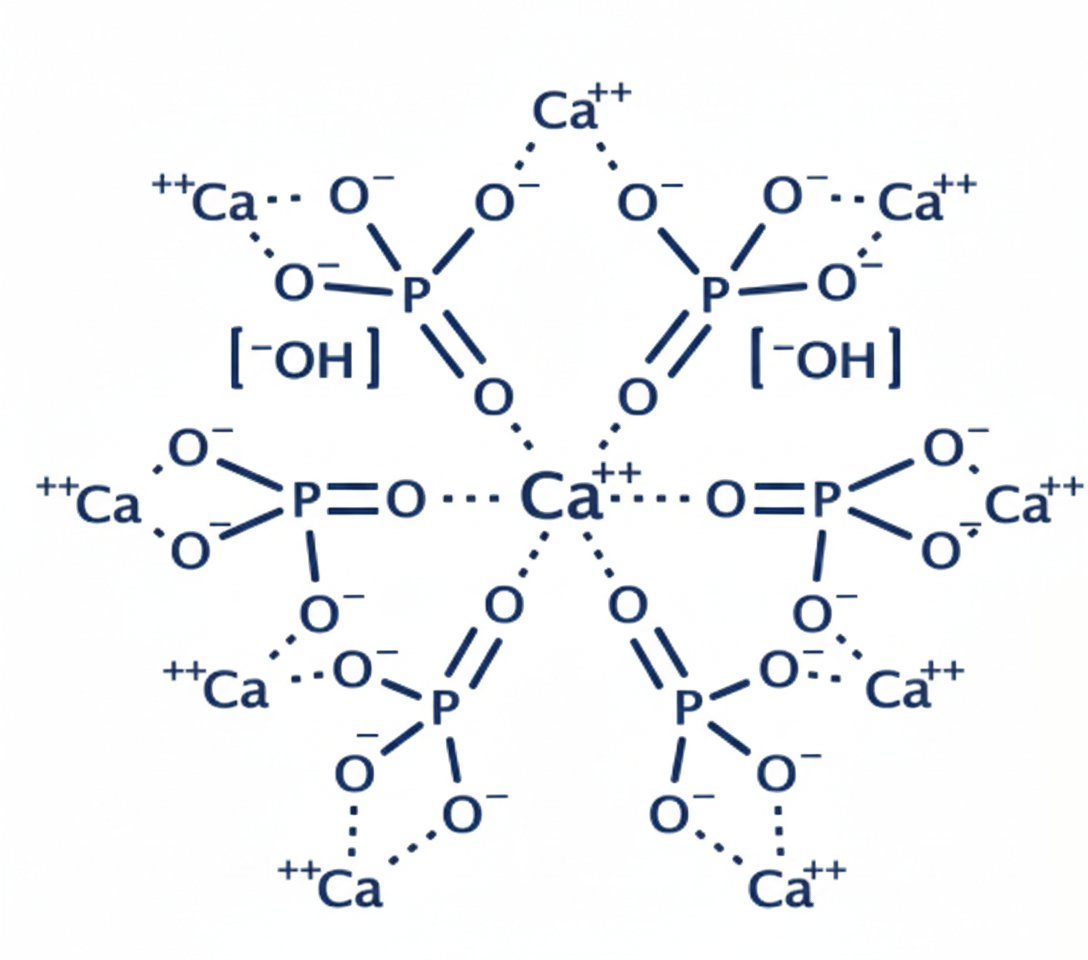
Structure of nano-hydroxyapatite
Tooth enamel is primarily composed of hydroxyapatite, a calcium-phosphate mineral that gives teeth their strength. Nano-hydroxyapatite is a lab-engineered version of this same mineral, created at an extremely small (nano-scale) size so it can interact more effectively with enamel surfaces.
Because nano-hydroxyapatite closely resembles the structure of natural enamel, it’s often described as biomimetic—meaning it works with the body rather than against it. Instead of relying on a chemical reaction alone, it provides the building blocks enamel needs to support remineralization, the natural process by which weakened enamel can regain strength.
This concept aligns closely with how we think about preventive dentistry and long-term oral wellness.
How Nano-Hydroxyapatite Supports Enamel
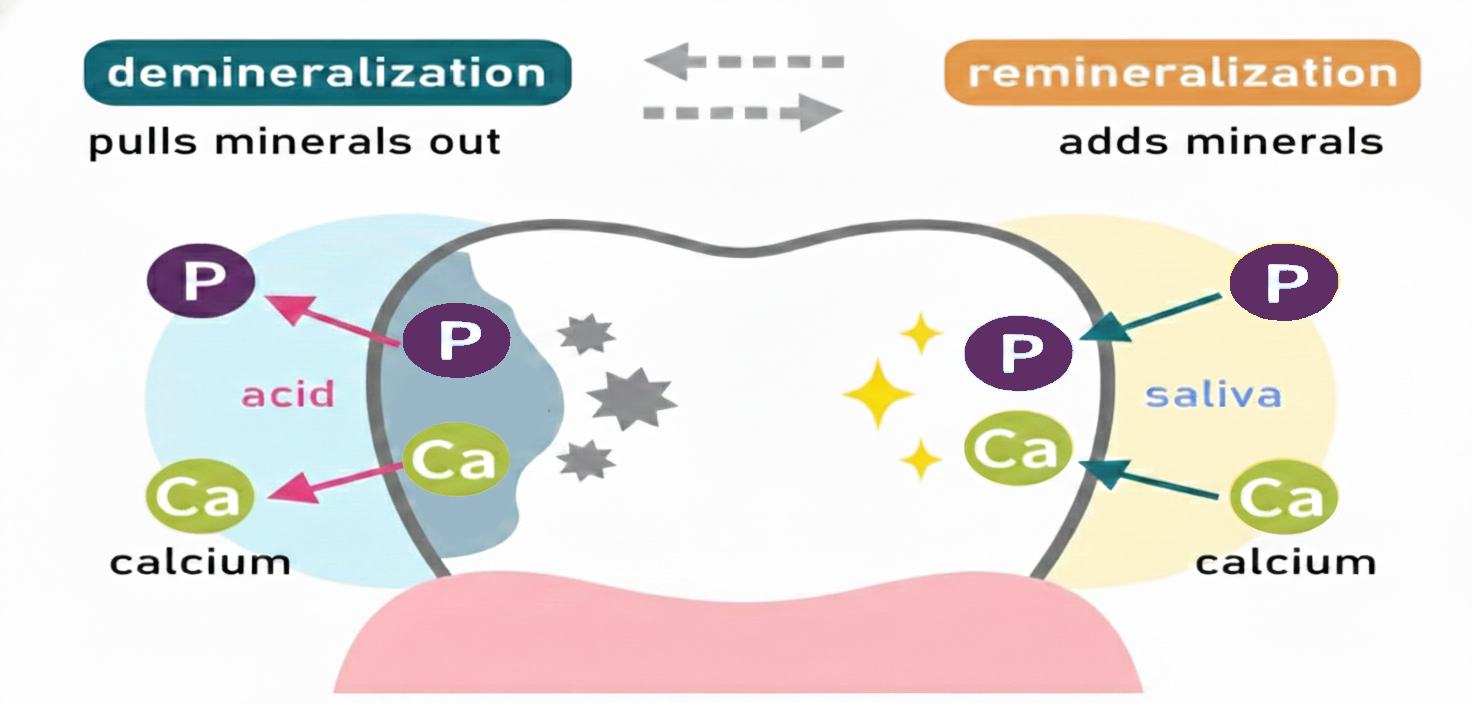
Daily cycle of mineral loss and remineralization
Every day, teeth go through cycles of demineralization and remineralization. Acids from bacteria, diet, and dry mouth can pull minerals out of enamel, making it softer and more vulnerable. Saliva helps reverse this process, but saliva alone isn’t always enough—especially in people with dry mouth, frequent snacking habits, or a higher cavity risk.
Nano-hydroxyapatite works by depositing calcium and phosphate directly onto the enamel surface. Because the particles are so small, they can adhere to microscopic defects in enamel and help reinforce areas that are beginning to weaken. Over time, this can help smooth the enamel surface, reduce sensitivity, and support enamel strength.
Importantly, this process does not “repair cavities,” but it may help slow or stabilize very early enamel changes when combined with good oral hygiene and professional care.
Nano-Hydroxyapatite and Tooth Sensitivity
One area where nano-hydroxyapatite shows particular promise is tooth sensitivity. Sensitivity often occurs when enamel thins or when exposed dentin contains open tubules that transmit temperature changes to the nerve.
Nano-hydroxyapatite particles can help block these microscopic tubules, reducing fluid movement and calming sensitivity. This makes nHA-based toothpaste a useful option for patients with gum recession, enamel wear, or post-whitening sensitivity.
How Does It Compare to Fluoride?
Fluoride remains one of the most effective tools we have for cavity prevention, especially in high-risk patients. It works by strengthening enamel and making it more resistant to acid attack. However, fluoride relies on calcium and phosphate already being present in saliva to be most effective.
Nano-hydroxyapatite approaches enamel support from a different angle by supplying calcium and phosphate directly. For some patients, especially those with dry mouth, medication-related dry mouth, or fluoride sensitivity, nano-hydroxyapatite can be a helpful alternative or adjunct.
This isn’t an “either-or” conversation. In fact, in many cases, a personalized approach that considers caries risk assessment, saliva quality, and lifestyle factors leads to the best long-term outcomes.
Why Toothpaste Formulation Matters
Not all nano-hydroxyapatite toothpastes are created equal. Particle size, concentration, and shape all influence how well the product performs. Larger “micro-sized” particles do not behave the same way as true nano-scale particles, and very low concentrations may offer minimal benefit.
This is why professional guidance matters. Just like with fluoride strength or desensitizing toothpaste selection, choosing the right product depends on your specific oral health needs—not marketing claims alone.
Who May Benefit Most from Nano-Hydroxyapatite?
Nano-hydroxyapatite toothpaste may be especially helpful for patients with early enamel wear, frequent sensitivity, dry mouth, orthodontic appliances, or a history of acid exposure from diet or reflux. It can also be a good option for individuals seeking a fluoride-free toothpaste while still wanting enamel support grounded in science.
As with any preventive tool, it works best as part of a comprehensive approach that includes regular professional cleanings, personalized home care, and ongoing monitoring.
A Wellness-Focused Perspective on Enamel Care
At our office, we focus on preserving natural tooth structure whenever possible. That means supporting the body’s ability to maintain healthy enamel, not just reacting once damage has already occurred.
Nano-hydroxyapatite represents a shift toward biologically supportive oral care, and when used appropriately, it can be a valuable part of a modern preventive strategy.
If you’re curious whether nano-hydroxyapatite toothpaste is right for you, we’re happy to help you choose an option that fits your oral health goals and risk profile.