Dental Bridges vs. Partial Dentures: What’s the Difference?
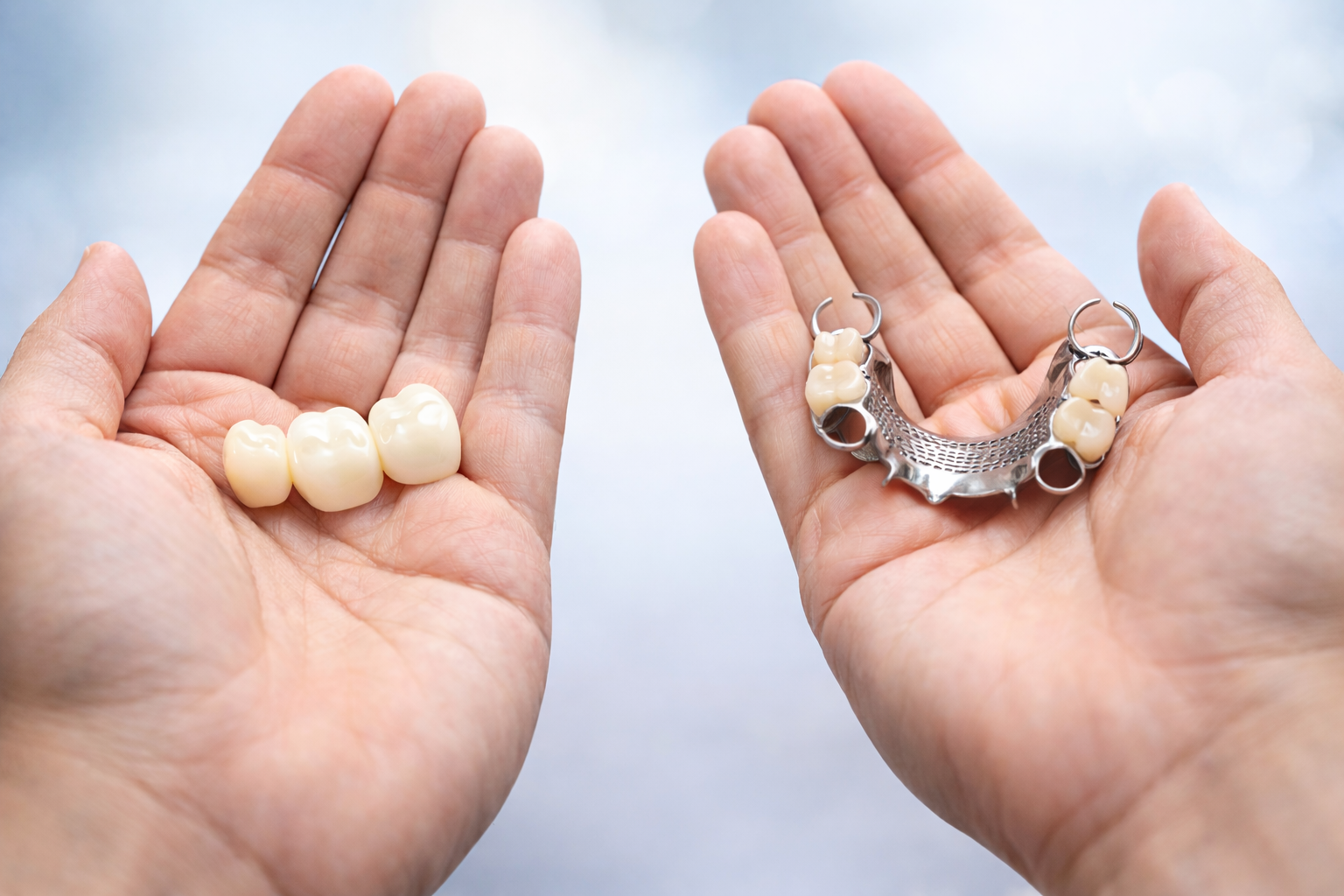
When a tooth is missing, patients may be told they need a bridge or partial, but those terms are confusing and need to be explained clearly. While both options replace missing teeth, they differ in how they’re supported, how they feel, and how they affect long-term oral health.
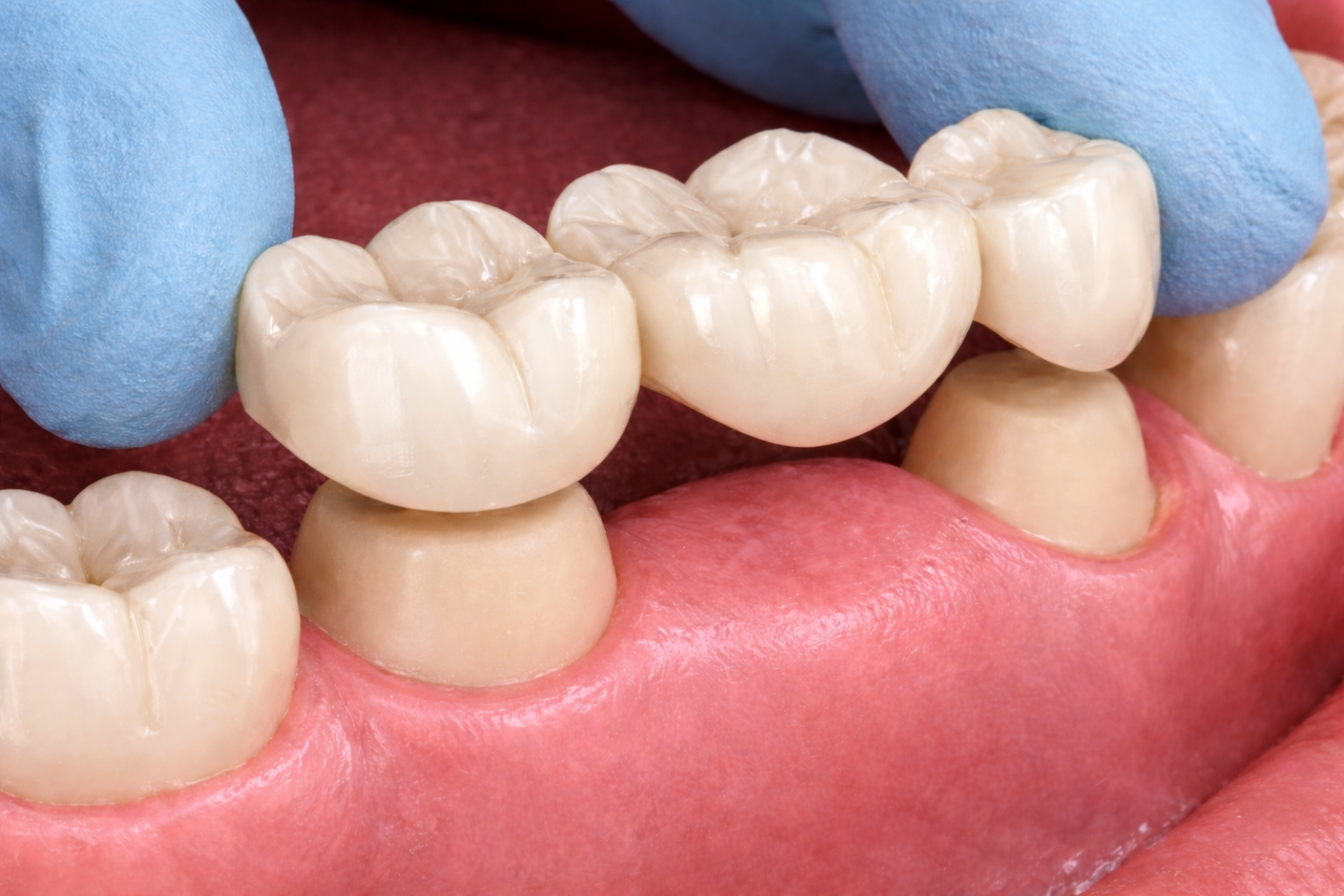
A dental bridge replaces one or more missing teeth by anchoring to the teeth on either side of the gap. These supporting teeth are typically reshaped to hold crowns, with the replacement tooth suspended between them.
Key characteristics:
Fixed in place and does not move
Feels very similar to natural teeth
Requires reshaping of adjacent teeth so crowns can support the bridge
Cleaned like natural teeth using brushing and flossing, often with special flossing aids
Typically lasts many years when oral hygiene is excellent
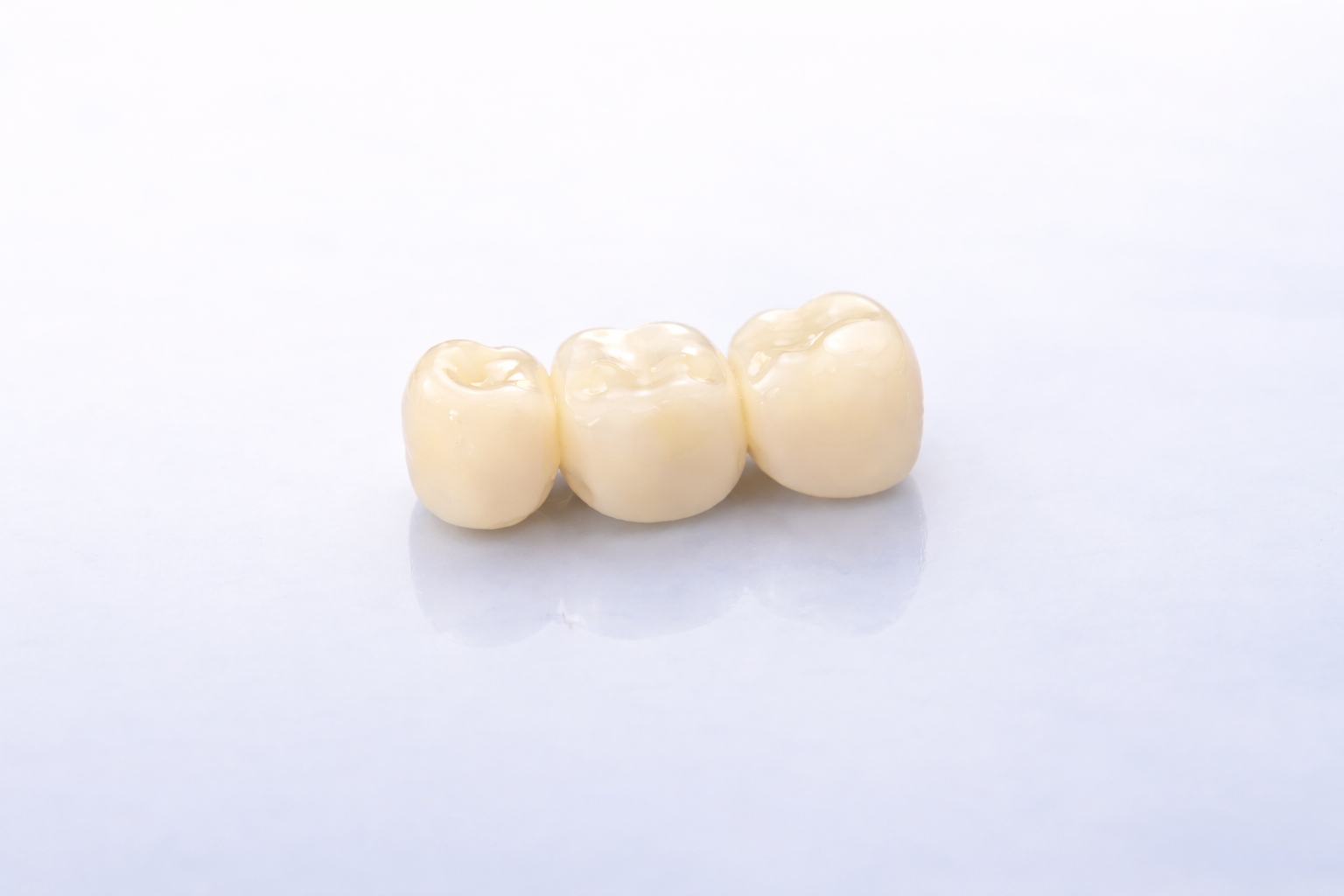
What Is a Dental Bridge?
Dental Bridge — Pros
Fixed and very stable
Natural look and feel
No need to remove for cleaning
Dental Bridge — Cons
Requires reshaping otherwise healthy teeth in some cases
If existing crowns are present on supporting teeth, they must be removed and replaced
Can be harder to clean underneath if oral hygiene is poor
Not ideal if the supporting teeth are weak or compromised
If one part of the bridge becomes damaged the whole bridge usually needs to be replaced.
Insurance contracts may downcode to a partial denture
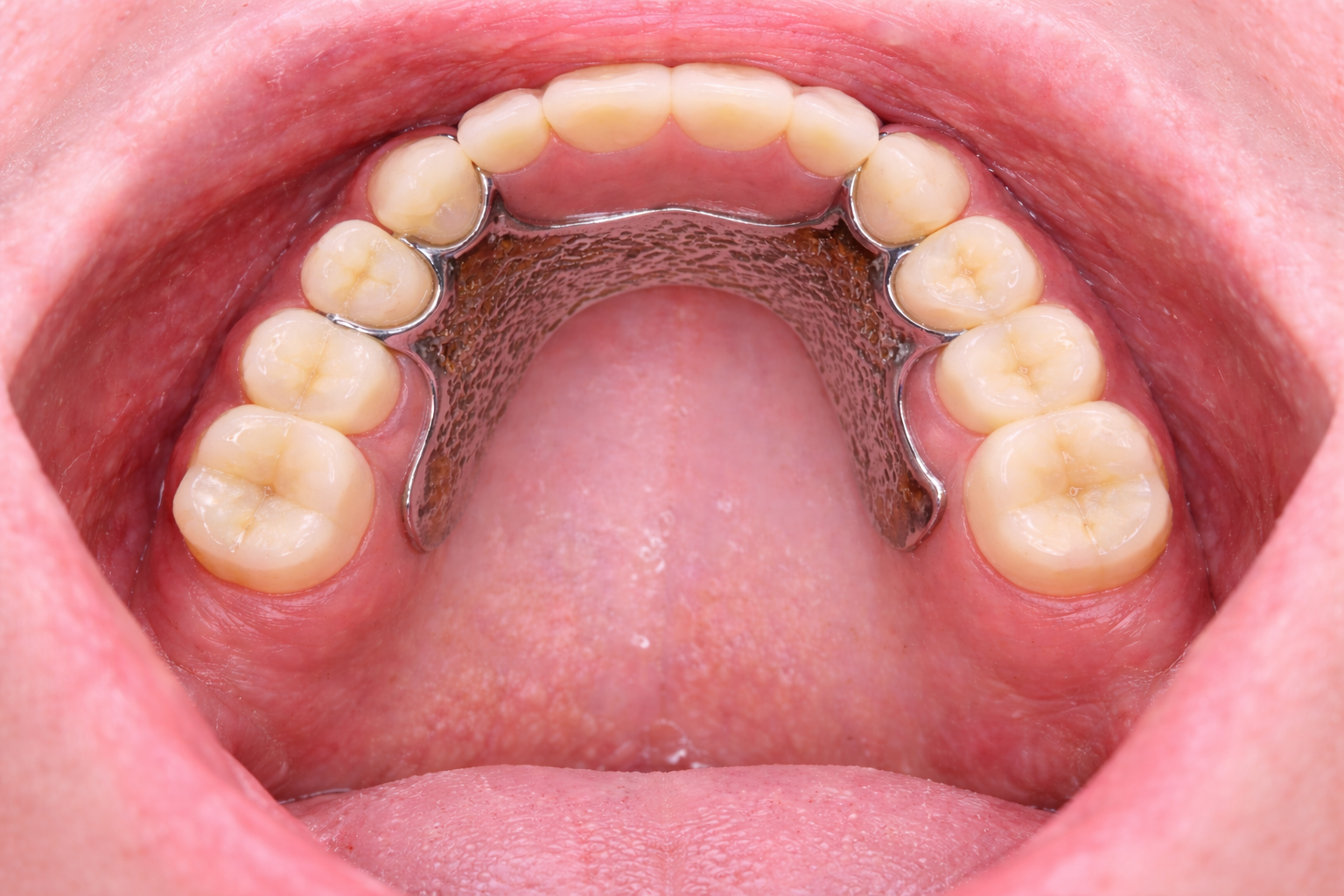
A partial denture is a removable appliance that replaces one or more missing teeth and is supported by remaining teeth and gums.
Key characteristics:
Removable and taken out daily for cleaning
May move slightly during function
Food can become trapped underneath, sometimes requiring removal after meals
Some teeth may need minor contouring, and rest seats may be placed to properly support the appliance
May require adjustments, relines, or replacement as gums and teeth change over time
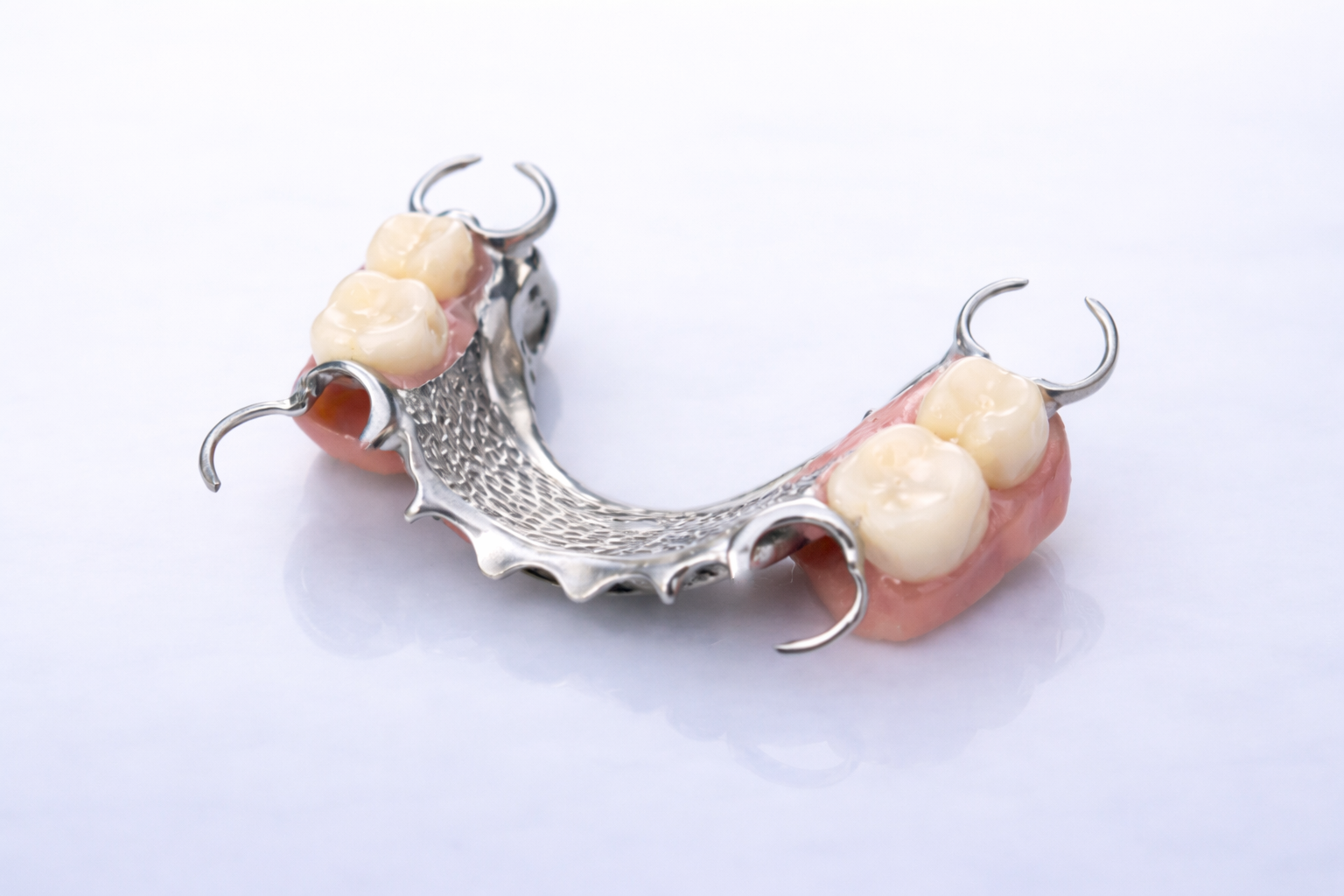
Partial Denture
Partial Denture — Pros
Conservative to surrounding teeth
Can replace multiple missing teeth in different areas
Often lower initial cost
Insurance usually covers some of the cost
Partial Denture — Cons
Removable and may feel bulkier
May need to be removed after meals to clean trapped food
Clasps can loosen over time and may need periodic adjustment
Metal clasps may be visible and affect esthetics
Make take multiple appointments to fabricate
May need to be relined underneath as bone and tissue resorb