
Cold Sores, Canker Sores, and Your Dental Appointment
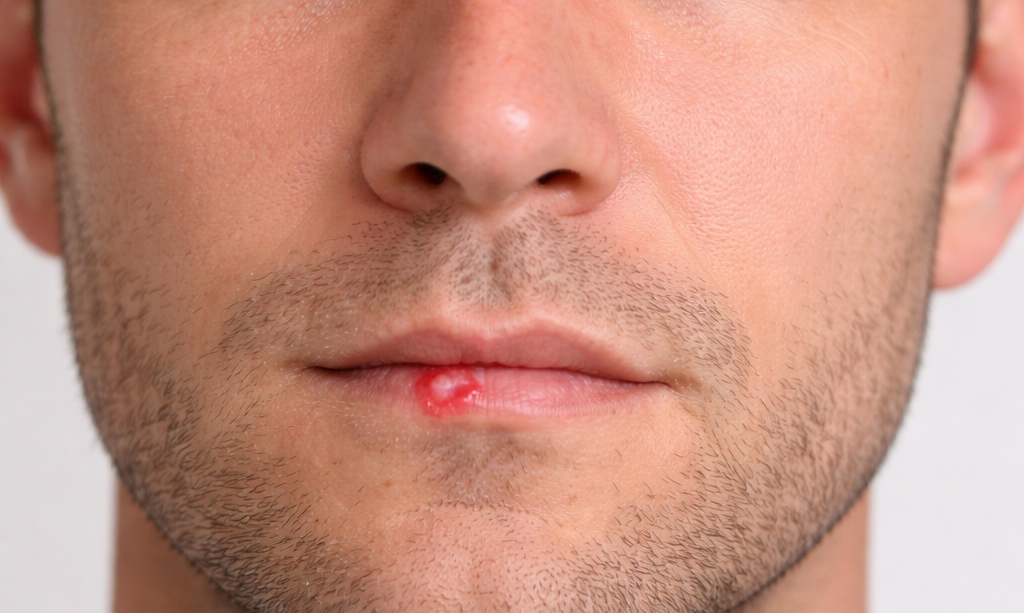
Cold sore on the lower lip
Few things are more frustrating than waking up with a sore on your lip right before a dental visit. Patients often ask the same question:
“Should I still come in?”
The answer depends on what type of sore you’re dealing with.
What Is a Cold Sore?
A cold sore is caused by the herpes simplex virus (HSV-1). After the initial exposure, the virus remains dormant and can reactivate at various times throughout life. Many patients notice triggers such as stress, illness, fatigue, or sun exposure.
Cold sores typically begin with a subtle tingling or burning sensation, followed by a fluid-filled blister. The blister eventually breaks, crusts, and heals.
Because cold sores are viral and contagious during the active phase, they carry special considerations in dentistry.
Why Dentists Pay Attention to Cold Sores
Dental procedures require stretching of the lips, moisture control, and instrument contact near soft tissues. When an active lesion is present, treatment can become uncomfortable and healing may be delayed.
There is also the practical issue of viral activity within the lesion. Even though dental offices follow strict infection control protocols, avoiding unnecessary exposure is always preferable.
For these reasons, rescheduling is often the most appropriate choice when a cold sore is active.
Can Dental Treatment Trigger a Cold Sore?
It can.
Lip stretching and procedural stress occasionally act as triggers in susceptible patients. Individuals with frequent outbreaks sometimes benefit from preventive antiviral medication prescribed by their physician.
The Common Source of Confusion: Cold Sores vs. Canker Sores
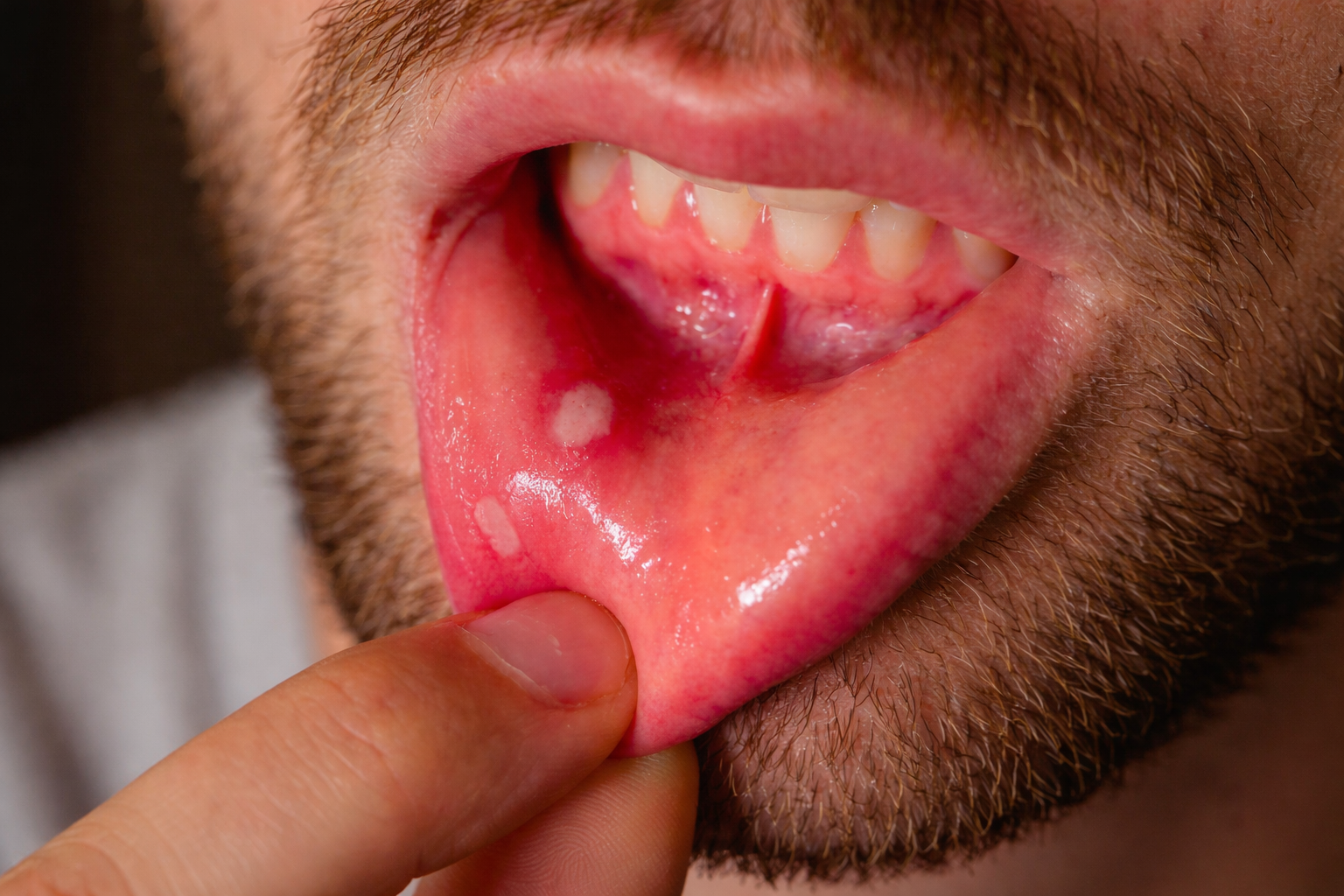
Canker Sore inside lower lip
Patients frequently use these terms interchangeably, but they represent completely different conditions.
A cold sore:
Is caused by a virus
Is contagious during the active stage
Usually appears on the lip border
Begins as a blister
A canker sore (aphthous ulcer):
Is not viral
Is not contagious
Occurs inside the mouth
Begins as an ulcer
This distinction matters because it directly influences how we manage your appointment.
What If It’s a Canker Sore?
In most cases, treatment can proceed normally.
Aphthous ulcers may be uncomfortable, but they do not involve viral shedding or infection concerns. We simply work gently around the area when possible.
So, Should You Reschedule?
If you notice tingling, blister formation, or an open cold sore near the lip, rescheduling is usually the best option for comfort and healing.
If the sore is inside the mouth and consistent with a canker sore, your visit can generally continue without issue.
When in doubt, a quick call to the office is always appropriate. These situations are common, and we help patients navigate them every day.
The Bigger Picture
Rescheduling a visit because of an active cold sore is not about inconvenience. It is about minimizing irritation, supporting tissue healing, and ensuring the most predictable clinical outcome.
Your comfort — and your long-term oral health — always guide the decision.