
Remember that Floss Controversy?
Back in 2016, a wave of headlines declared that there was “no proof flossing works.” Understandably, a lot of people were confused — and some quietly stopped flossing altogether. I still hear about that story from patients today, so I think it’s worth taking a look at what really happened, what the research actually meant, and what you should be doing now to protect your teeth and gums.
What Those Headlines Really Meant
The news reports didn’t show that flossing was harmful or useless. What they highlighted was that, at the time, most of the existing flossing studies weren’t strong enough to meet the highest level of scientific proof. Many of those studies were short-term, used small groups of people, or relied on self-reported flossing (which isn’t always accurate). And technique varies a lot from person to person. So the conclusion wasn’t “flossing doesn’t work.” It was really closer to, “we don’t yet have enough high-quality, long-term research to prove it at the highest scientific standard.”
That’s an important distinction — lack of proof is not the same thing as proof of failure.
What We Know Now
Most dental and medical organizations still agree on one big point: the spaces between your teeth matter. They’re areas your toothbrush simply can’t reach, and they absolutely need to be cleaned every day if you want to keep inflammation under control. Floss is one way to do that — and for the right mouth, it’s a very good way.
Where things get more interesting is when we look at which tool works best for which patient. Floss tends to work best in mouths where the gums are still healthy and tightly fill the spaces between the teeth. Younger patients — or adults with intact gum architecture and little to no recession — usually fall into this category. In those situations, the tooth surfaces are mostly smooth and covered by gum tissue, so floss can wrap around the tooth and do a pretty good job of removing plaque.
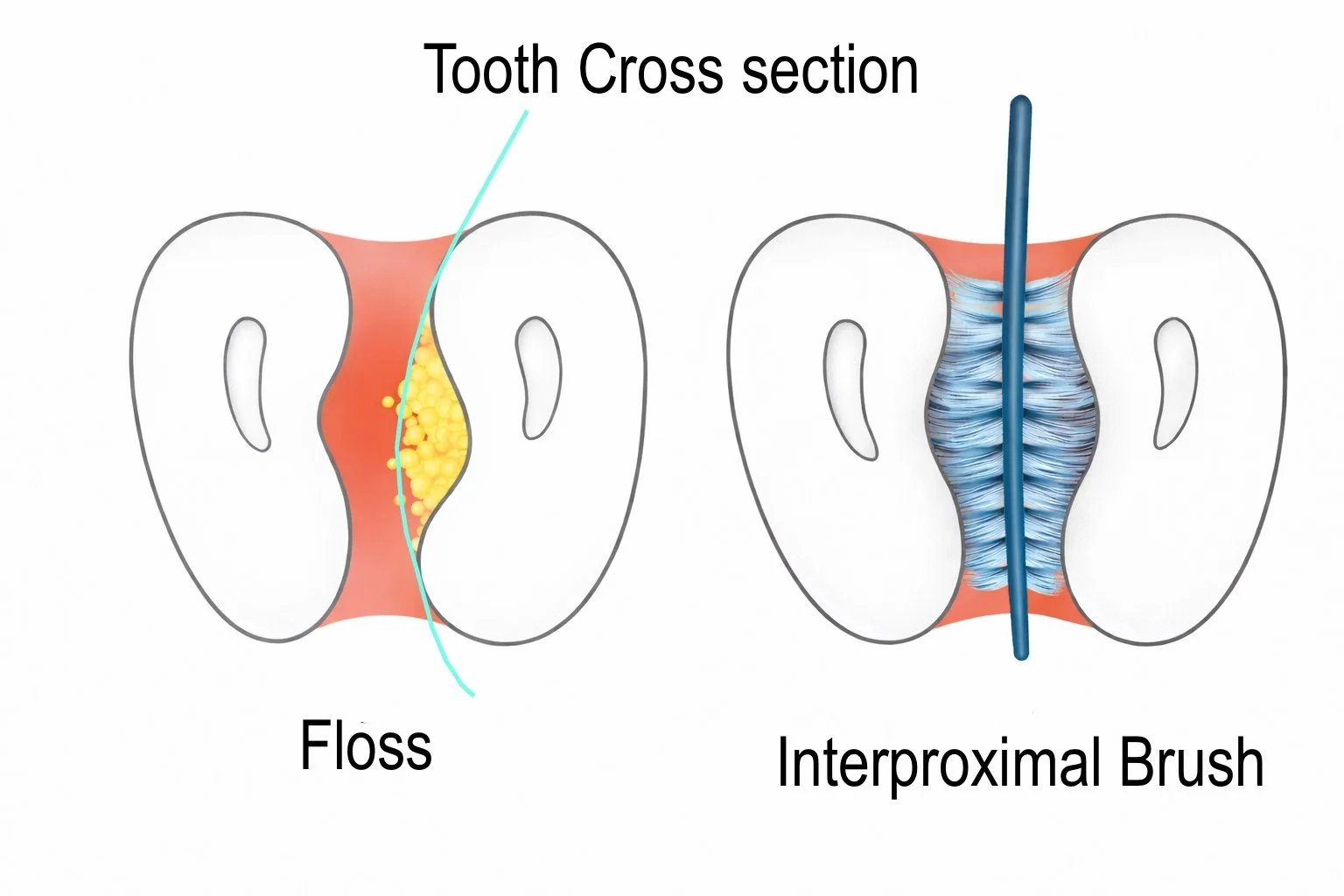
When gums recede they may expose surfaces that floss can’t clean effectively. This is a cross-section showing the tooth anatomy of root surfaces.
But as we age, or when periodontal inflammation and bone loss occur, more of the root surface becomes exposed. And roots aren’t smooth like enamel. They often have natural grooves, concavities, and even furcations in the molars. A flat piece of floss simply cannot fully adapt into those three-dimensional shapes, even when used with good technique. That’s where small interdental brushes and water flossers often do a better job. They physically reach into those spaces and disrupt more of the biofilm.
So the real question isn’t, “Does floss work?” The better question is, “What is the right interdental cleaning method for your anatomy?”
So… Should You Keep Flossing?
For many people, yes. If you have tight contacts, healthy gum tissue, and little to no recession, floss may still be the best tool for you. But if you’ve developed recession, bone loss, exposed roots, dental implants, orthodontic appliances, or dexterity challenges, there may be better options — and that’s not a failure on your part. It just means your mouth has changed, and your home care should change with it.
What Hasn’t Changed
One thing remains true: plaque (or biofilm) is a living microbial community. It needs to be disrupted every single day — not just from the chewing surfaces you can see, but in the spaces between the teeth where inflammation often starts. If your gums bleed when you clean between your teeth, that’s a sign of inflammation, not a signal to stop. It means we should take a closer look together.
A More Personal, Preventive Approach
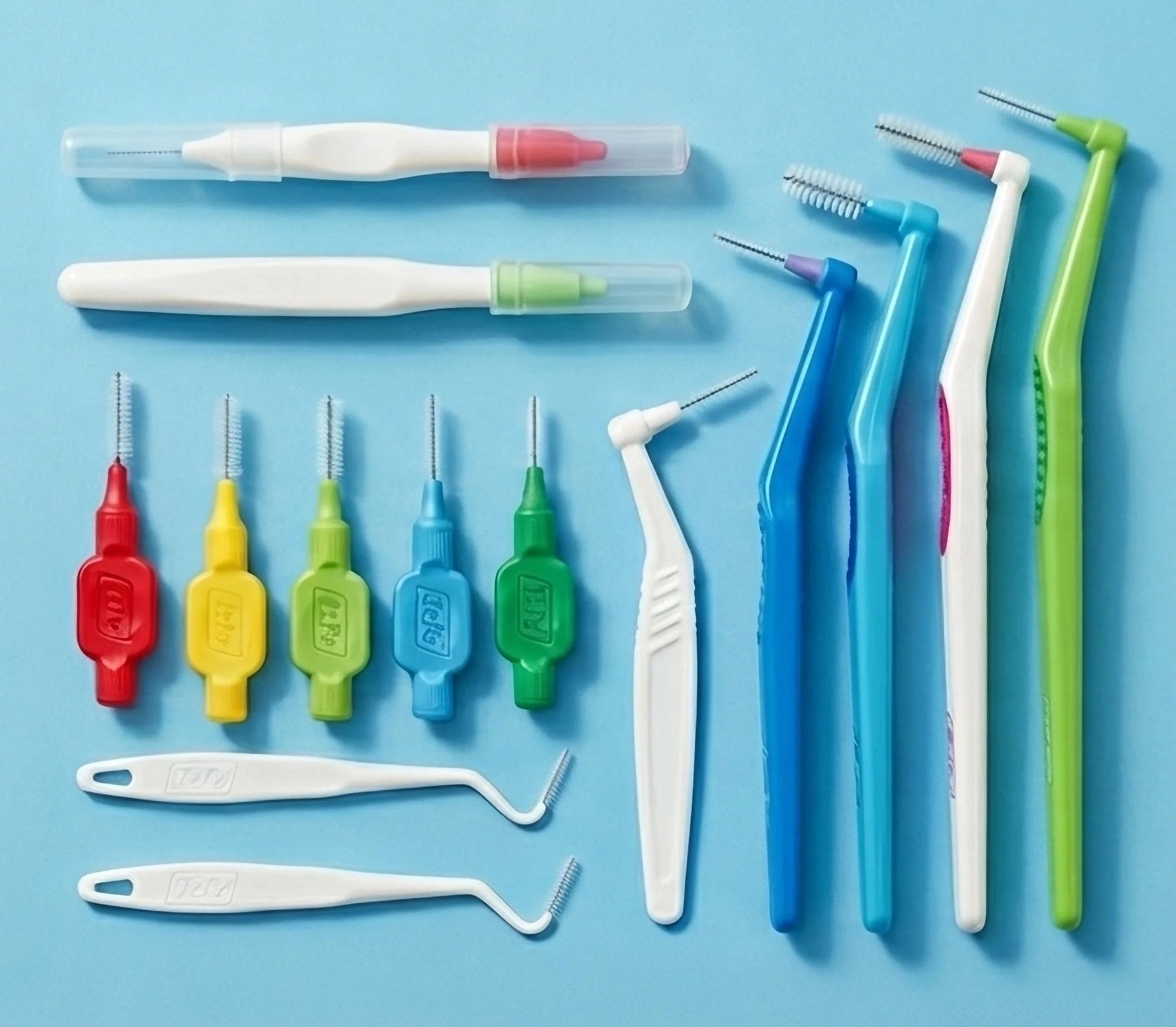
Dentistry is not one-size-fits-all anymore. Your gum condition, tooth anatomy, saliva levels, medical history, caries risk, and even personality and habits all matter when we design a plan for you. My goal is always prevention — and to help you find a routine that works in real life and actually supports long-term oral and systemic wellness.
The Bottom Line
The 2016 floss controversy didn’t prove that flossing is useless. What it really did was remind us that evidence evolves, that technique matters, and that the right tool depends on the person using it. Cleaning between your teeth every day is still essential. Floss is one option — and for some people, it’s the best option. For others, there are tools that do the job even better.
If you’ve been wondering whether flossing is “worth it,” the answer is: yes — if floss is the right tool for your mouth. And if it isn’t, that’s okay. We’ll help you find what is. Your smile — and your overall health — are worth that level of attention.