
Curcumin and Periodontal Health: An Old Remedy Finding a New Role
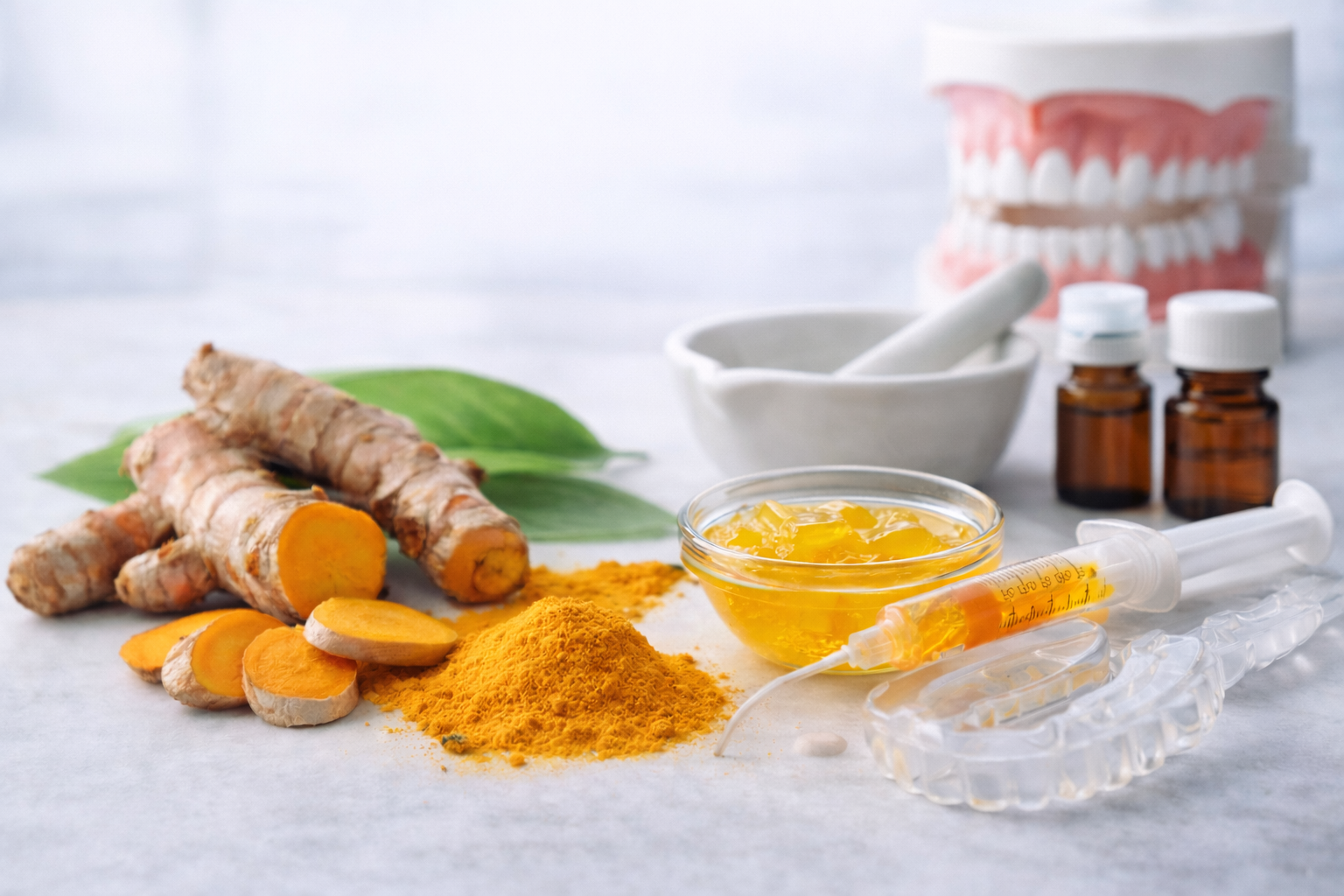
Curcumin-based therapies represent the intersection of natural compounds and modern periodontal care, supporting inflammation control when delivered directly to the gums.
One of the most interesting shifts I’ve seen in dentistry over the years is a renewed interest in natural compounds—not as replacements for conventional care, but as adjuncts that work alongside it. Curcumin is one of those compounds.
Curcumin is the primary active component of turmeric, a spice that has been used for centuries in traditional medicine, particularly in India and parts of Asia. Historically, turmeric was used for wound healing, inflammation, and infection long before modern pharmaceuticals existed. Today, science is beginning to explain why it was so widely valued.
What Is Curcumin?
Curcumin is a naturally occurring polyphenol found in the root of the turmeric plant (Curcuma longa). It’s what gives turmeric its deep yellow-orange color. Over the past few decades, curcumin has been studied extensively for its anti-inflammatory, antioxidant, and antimicrobial properties.
Because inflammation plays a central role in periodontal disease, it’s not surprising that researchers have begun exploring whether curcumin might support periodontal therapy when used appropriately.
Why Inflammation Matters in Periodontal Disease
Periodontal disease isn’t just about bacteria—it’s about the body’s inflammatory response to those bacteria. In many patients, tissue destruction occurs not only because of microbial activity, but because of how aggressively the immune system responds.
This understanding has reshaped modern periodontal care. Today, treatment focuses not only on removing plaque and calculus, but also on managing host response, inflammation, and the biological environment around the teeth.
Curcumin appears to interact with several inflammatory pathways involved in periodontal breakdown. Laboratory and animal studies suggest it may influence signaling systems that drive inflammation and tissue destruction, helping to calm the local environment rather than simply targeting bacteria.
What the Research Is Showing So Far
Clinical studies over the past several years have evaluated curcumin primarily as an adjunct to scaling and root planing, not as a stand-alone therapy. When delivered locally—often as a gel placed directly into periodontal pockets—curcumin has been associated with reductions in gingival inflammation, bleeding, and, in some cases, pocket depth in short-term studies.
Some research has even compared curcumin gels to more traditional agents such as chlorhexidine, finding comparable improvements in inflammation without some of the side effects patients often dislike.
That said, the research is still evolving. Many studies are small, and there is variability in formulation, concentration, and delivery methods. Long-term outcomes—such as attachment stability and bone preservation—continue to be investigated.
Why Delivery Matters
One of curcumin’s challenges is that it’s poorly absorbed when taken orally. This is why most periodontal research has focused on local delivery—placing curcumin directly where it’s needed.
Clinically, this makes sense. Periodontal disease is localized, and delivering supportive agents directly into periodontal pockets allows for higher concentrations at the site of inflammation without relying on systemic absorption.
In addition to in-office placement of gels, custom dental trays like Perio Protect trays offer another way to deliver therapeutic agents directly to the gums and tooth surfaces. These trays are designed to hold medication in close contact with the gingival tissues for a sustained period of time, improving exposure and consistency.
Tray-based delivery systems have been studied and used to deliver a variety of periodontal agents, and they align well with a modern approach that emphasizes targeted, site-specific therapy rather than relying solely on rinses or systemic medications.
How Curcumin Fits Into Modern Periodontal Care
It’s important to be clear: curcumin does not replace professional periodontal therapy. Mechanical biofilm removal, proper diagnosis, and ongoing maintenance remain the foundation of care.
Where curcumin may be helpful is as part of a broader, biologically informed approach—particularly for patients with significant inflammation, those seeking gentler adjuncts, or those interested in evidence-based natural options.
This reflects a larger shift in dentistry toward viewing periodontal disease as a chronic inflammatory condition rather than simply an infection to be eliminated.
A Balanced Perspective
Curcumin is not a miracle cure, and it should not be marketed as one. However, the growing body of research suggests it may be a useful tool when used thoughtfully and appropriately.
As with many aspects of healthcare, progress lies in integration—combining proven mechanical treatment with targeted adjuncts that support the body’s natural healing processes.
Final Thoughts
What I find most compelling about curcumin is that it represents a bridge between traditional wisdom and modern science. A compound used for centuries is now being examined through the lens of inflammation biology and clinical research.
As our understanding of periodontal disease continues to evolve, therapies that help reduce inflammation and support tissue health—without unnecessary side effects—deserve careful consideration.