
Hydration and Oral Health: Simple Habit, Big Impact
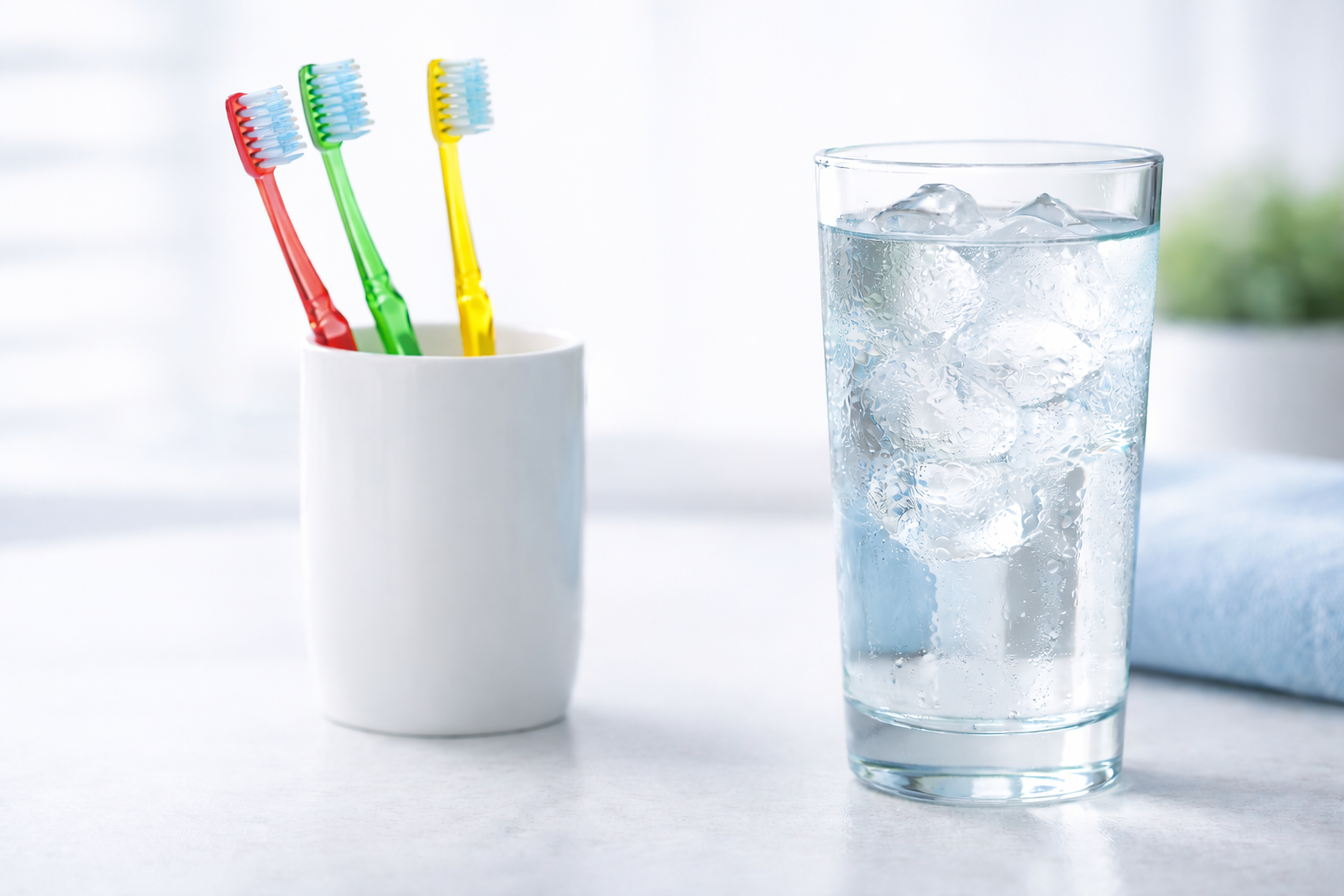
Hydration and oral health are closely connected.
Water plays a much bigger role in oral health than most people realize. We often focus on brushing, flossing, and toothpaste—and those are important—but hydration quietly supports almost every protective function in the mouth.
Saliva is one of your body’s first lines of defense against cavities and gum disease. It helps neutralize acids, wash away food particles, and deliver minerals that support tooth enamel. When you’re not drinking enough water, saliva production drops, and the mouth becomes more vulnerable to decay, irritation, and infection.
Dry mouth is especially common in patients who take medications. Many commonly prescribed drugs—such as antidepressants, blood pressure medications, allergy medicines, and sleep aids—reduce saliva flow. When dehydration is added on top of medication-related dry mouth, the effects can be magnified. Patients may notice increased sensitivity, a sticky or burning feeling in the mouth, more plaque buildup, or a sudden rise in cavities despite brushing well.
Staying properly hydrated helps support saliva production throughout the day. Water also helps rinse sugars and acids from the teeth between meals, especially when brushing isn’t possible. For patients at higher risk for cavities, simply increasing water intake can be a meaningful part of prevention.
It’s also important to remember that thirst isn’t always a reliable signal. Many people are mildly dehydrated without realizing it—especially older adults and those who spend long hours indoors, in dry environments, or in air conditioning.
At our office, we look at oral health as part of overall wellness. Hydration is one of the simplest, most overlooked ways to support both. Drinking enough water won’t replace brushing or professional care, but it creates a healthier environment in the mouth and helps the body do what it’s designed to do.
To help patients better understand their hydration needs, we’ve created a Water Intake Calculator, available on our website under Patient Resources. This tool provides a simple estimate based on factors like body weight and activity level, and can be a helpful starting point for improving daily hydration habits.
If you struggle with dry mouth, frequent cavities, or gum irritation, hydration is an important place to start. We encourage patients to be mindful of their daily water intake and to view water not just as a beverage, but as a key part of oral health.