

Fusobacterium nucleatum
(F.n.) is a common oral bacterium known as a bridge organism. It helps connect early, health-associated bacteria with later, more aggressive species associated with periodontal disease. While it is often present in healthy mouths, elevated levels or inflammation can allow it to support a shift toward a more pathogenic environment.
No. Fusobacterium nucleatum (F.n.) is commonly found in the mouth and can be present even when gums look healthy. At low levels and in the absence of inflammation, it may simply reflect a stable biofilm. Concern arises when levels increase or when the oral environment changes—such as with inflammation, reduced saliva flow, or immune stress—allowing F.n. to support a shift toward a more pathogenic balance. This is why we interpret results in context, not in isolation.
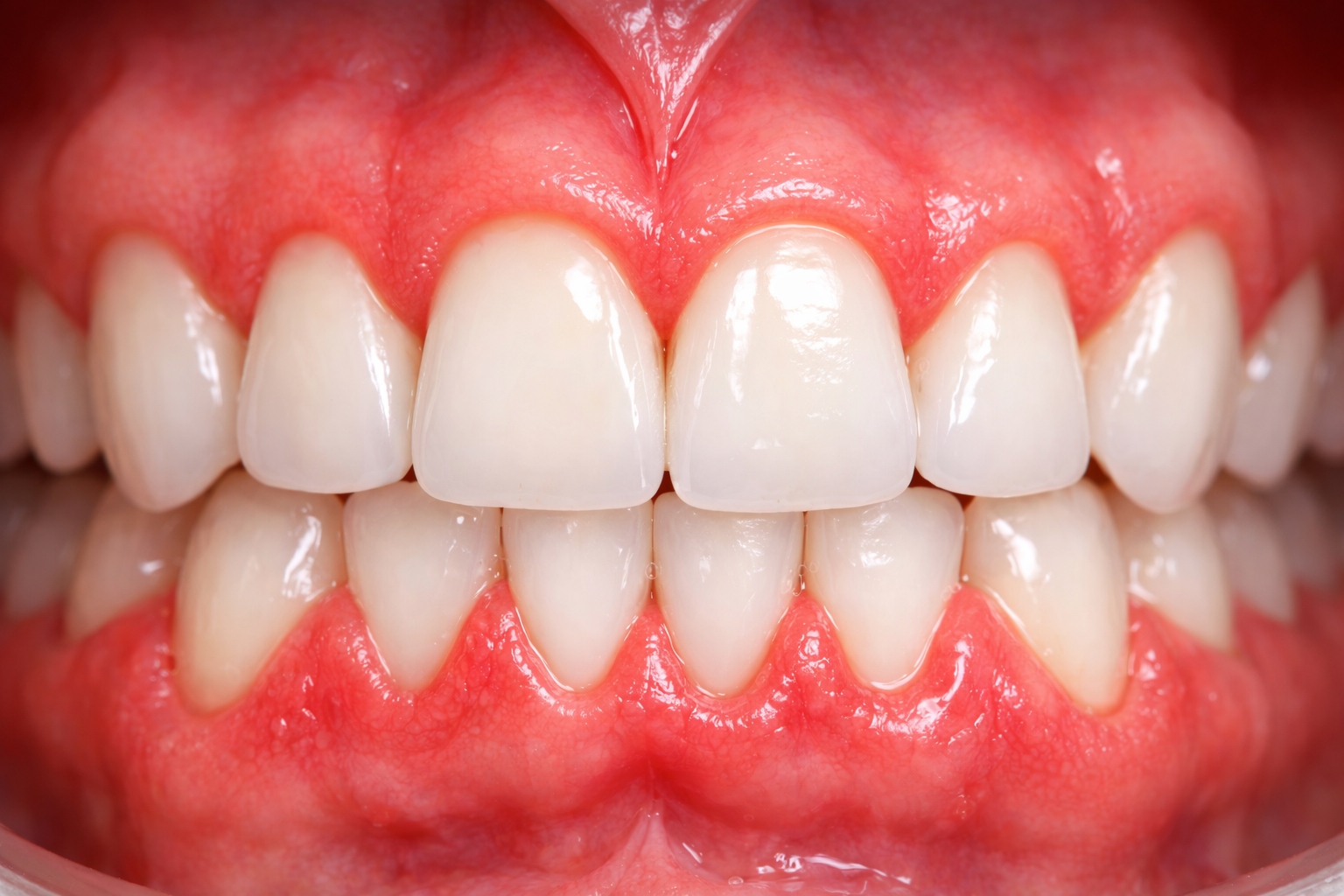
Is Fusobacterium nucleatum Always a Problem?

Complex Classification and Behavior
Fusobacterium nucleatum (F.n.) is part of the orange complex, a group of mainly anaerobic bacteria associated with shifts in biofilm balance. One of its key features is its ability to act like a biological “connector”, binding to multiple bacterial species at once. This allows F.n. to function much like Velcro, helping different bacteria stick together and organize into more complex biofilm structures—particularly in low-oxygen environments and along inflamed epithelial tissues. For this reason, elevated levels of F.n. are monitored as early biological signals of biofilm imbalance, rather than treated as a diagnosis on their own.
Fusobacterium nucleatum (F.n.) has been associated in research with several systemic conditions linked to chronic inflammation, including cardiovascular disease, adverse pregnancy outcomes, and certain gastrointestinal cancers, most notably colorectal cancer. These findings reflect associations—not causation—and help explain why maintaining a balanced oral environment is considered an important part of overall health.

Oral–Systemic Associations
Frequently Asked Questions
-
Fusobacterium nucleatum (F.n.) is a common bacterium found in dental biofilm. It plays a unique role as a bridge organism, meaning it helps connect early, health-associated bacteria with later, more aggressive species. Because of this role, it may be present even when the mouth appears healthy, and its significance depends on overall balance, inflammation, and individual risk factors.
-
ot always. Fusobacterium nucleatum (F.n.) is commonly found in the mouth and can be part of a normal biofilm. It becomes more relevant when levels increase or when inflammation is present, as it can help support a shift toward a more pathogenic environment. This is why we view it as a risk indicator, not a diagnosis.
-
Fusobacterium nucleatum (F.n.) does not typically cause gum disease on its own. Instead, it helps organize biofilm and can support the growth of more aggressive bacteria when inflammation is present. Its detection may signal increased biological risk, but a diagnosis of gum disease depends on clinical findings such as bleeding, pocket depth, and bone support.
-
es. Fusobacterium nucleatum (F.n.) is a gram-negative, anaerobic bacterium, meaning it thrives in low-oxygen environments such as deeper areas of dental biofilm. These characteristics help explain why it is commonly associated with biofilm maturation and why its levels tend to increase when inflammation or reduced oxygen balance is present.
-
Yes, in certain conditions. Fusobacterium nucleatum (F.n.) can attach to and penetrate epithelial tissues, especially when the oral barrier is compromised by inflammation. From there, it may occasionally enter the bloodstream or be swallowed and pass through the digestive tract. This does not mean it routinely spreads or causes systemic disease, but it helps explain why chronic oral inflammation is taken seriously and why maintaining a healthy oral environment is important for overall health.
-
Yes. In many cases, we focus on non-antibiotic strategies that support a healthier oral environment rather than trying to eliminate bacteria directly. Zinc-containing products, including zinc lozenges, have been shown to interfere with bacterial metabolism and biofilm activity, which may help limit conditions that allow organisms like Fusobacterium nucleatum (F.n.) to thrive. These approaches are considered supportive, not curative, and are typically used alongside measures that reduce inflammation and improve biofilm control.
-
most cases, no. The presence of Fusobacterium nucleatum (F.n.) on a saliva test does not automatically mean antibiotics are needed. Antibiotics are generally reserved for specific situations where there is active infection, significant disease progression, or clear clinical indications. More often, elevated levels are managed by addressing inflammation, improving biofilm control, and supporting a healthier oral environment rather than targeting the bacteria directly.
-
This is one of the most active areas of current research involving Fusobacterium nucleatum (F.n.). While it is primarily an oral organism, studies suggest it may reach the gastrointestinal tract through the bloodstream or other biological pathways when chronic inflammation is present. Research has shown that F.n. can be found within certain colorectal tumors, where it may interact with cancer cells and influence inflammatory and immune-related signaling. These interactions are thought to contribute to tumor persistence and progression, not by causing cancer directly, but by affecting the local inflammatory environment and immune response.