
What Is an Abscess?
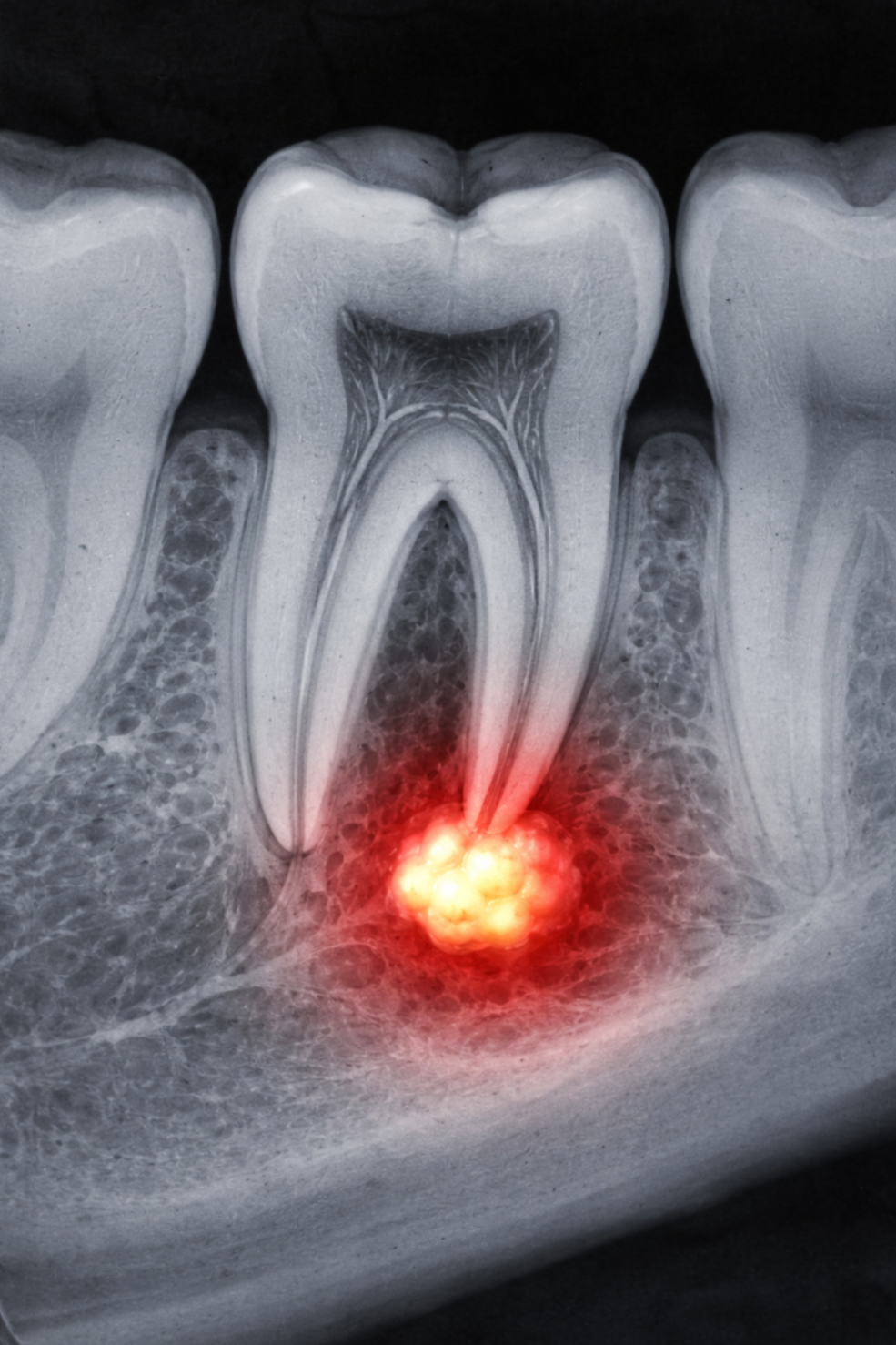
We get this question a lot: “What exactly is an abscess?”
The most common situation where we see a dental abscess is when tooth decay gets too deep and reaches the nerve at the center of a tooth. Once bacteria reach that space, the body can’t clear the infection on its own. The infection travels down the inside of the tooth, exits at the tip of the root, and the body responds by forming pus at the end of the tooth. That’s what we call a dental abscess.
What Does an Abscess Feel Like?
In many cases, abscesses are painful. Patients may feel throbbing, pressure, or pain when biting. Swelling or tenderness in the gum or face can also occur. But one of the most important things to understand is this: sometimes there are no symptoms at all. The tooth may stop hurting, or it may never have hurt in the first place. That doesn’t mean the infection is gone—it often just means pressure has temporarily relieved itself. This is why abscesses can be easy to miss without an exam and imaging.
How Are Dental Abscesses Treated?
When a tooth becomes abscessed, there are typically two possible treatment paths, depending on how much healthy tooth structure remains. If there is enough tooth left to predictably restore, root canal treatment may be recommended. This involves removing the infected tissue inside the tooth, disinfecting the space, and sealing it so the tooth can continue to function. If the tooth is too damaged or unstable to save, extraction may be the healthiest option. In those cases, we’ll also discuss replacement options when appropriate. The key point is that treatment addresses the source of infection, not just symptoms.
Why Early Treatment Matters
The earlier an abscess is treated, the better the outcome tends to be. Early treatment is usually simpler, more predictable, and less stressful on the surrounding bone and tissues. A chronically infected tooth doesn’t just affect the area around it. Ongoing infection adds to the body’s overall inflammatory burden. Bacteria and inflammatory byproducts from chronic oral infections can enter the bloodstream and contribute to systemic inflammation. Research has shown associations between chronic oral infections and increased risk for complications such as cardiovascular disease and, in certain situations, endocarditis. This does not mean a dental abscess directly causes these conditions—but it does mean that untreated infections can place unnecessary stress on the body, especially in patients who already have underlying health risks.
The Takeaway
A dental abscess is not something to ignore—even if it isn’t causing pain. Getting it evaluated early allows for more conservative treatment options and helps protect both oral and overall health. If something doesn’t feel right, or if it’s been a while since your last exam, it’s worth having it checked sooner rather than later.